
Klimt is so often associated with The kiss that encountering his forest paintings feels like stepping into a different mind entirely. They are quieter, cooler, almost secretive. If The kiss is about touch, these forests are about distance. Seeing these works feels like entering a private corner of his imagination - the place he went when he wanted to breathe.
At first glance, the paintings can look simple: vertical trees, repeating trunks, a carpet of leaves so dense it becomes pattern. But the more you look, the more the landscape seems to shift. Klimt doesn’t really paint forests; he paints perception: the way a forest becomes both infinite and held together by rhythm, and there is something hypnotic about it.
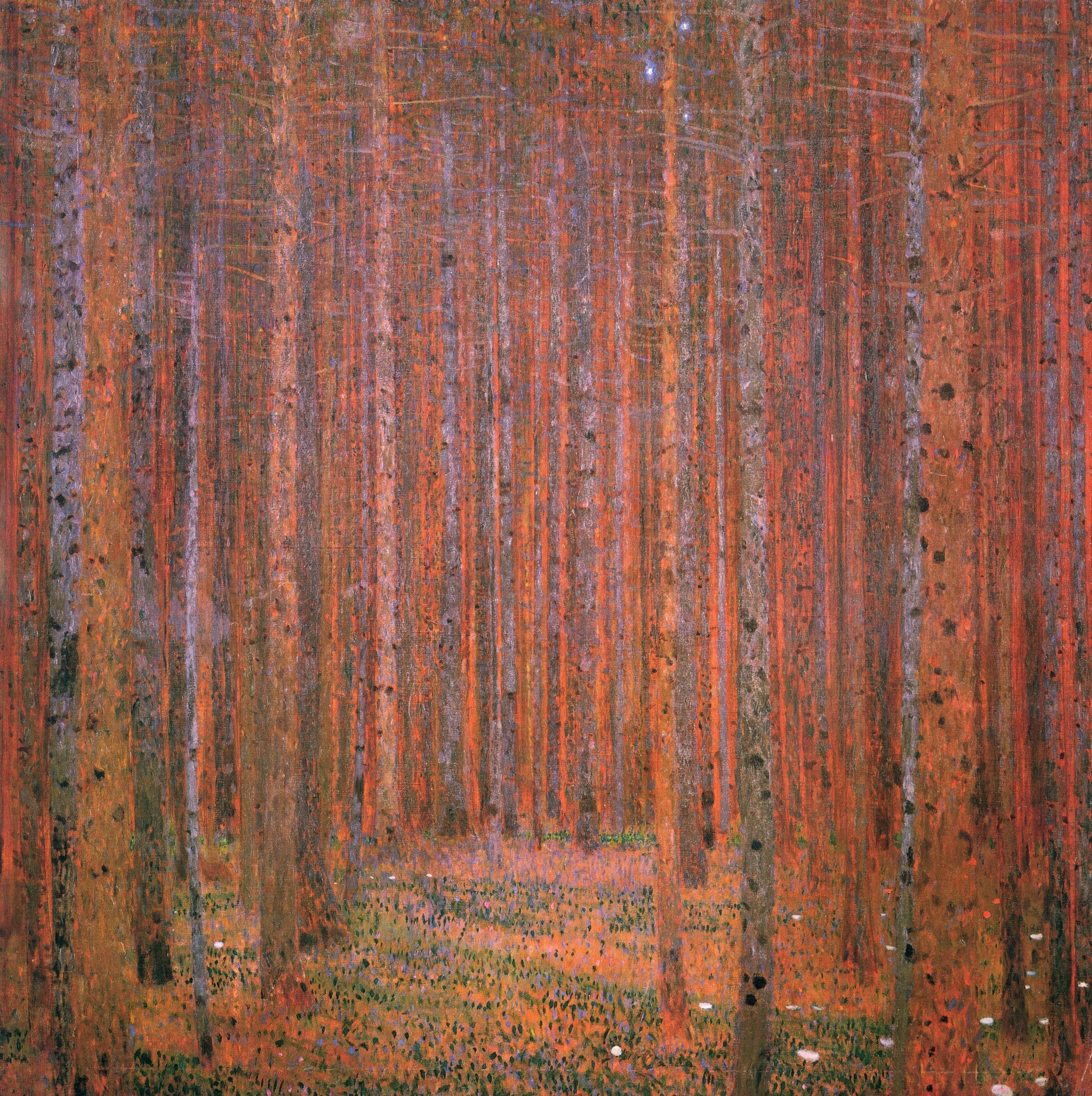
Unlike Turner [in a previous issue], who dissolves the world into light, Klimt turns the forest into a kind of geometry. Rows of birches become vertical brushstrokes; leaves merge into fields of color; the ground becomes a tapestry.
The painting’s pattern keeps unfolding in its simplicity.
We’re used to art showing us something extraordinary. Klimt’s forests do the opposite: they make the ordinary feel extraordinary again (as cliché as that may sound). They remind us of the beauty that lives in repetition, in pattern. They are invitations to slow down and look longer, more carefully, until the painting shifts from image to experience.
In a world that asks us to keep moving, Klimt’s forests ask us to stay still. To stand among the trees, real or painted, and let something in us settle. Sometimes the most compelling art isn’t the loudest or the most famous. It’s the work that teaches us how to see again - one tree at a time.