
Some novels manage to unsettle what we think we know. Juan Gabriel Vásquez’s The informers is one of those books. It begins as an act of investigation and becomes something far more intimate: a reckoning with the invisible ties between guilt and love, history and family, truth and narrative.
I came to it expecting a political novel; what I found was a moral labyrinth. Set in Bogotá, the book traces the long shadow of Colombia’s Second World War years - a time often absent from the country’s collective memory. During that war, hundreds of German immigrants, many of them Jewish refugees, were classified as “enemy aliens” and sent to internment camps or forced into exile. Some had fled Nazi Germany only to be accused of sympathizing with it. Others were denounced by neighbours, colleagues, or friends - by informers - sometimes out of fear, sometimes out of envy, sometimes just to belong.
Vásquez threads this forgotten history through a deeply personal story. The narrator, Gabriel Santoro, discovers that his father - a respected professor and public intellectual - was one of those informers. The revelation unravels not only their relationship, but also Gabriel’s understanding of his country, his past, and his own voice as a writer.
It’s a devastating premise, but Vásquez resists melodrama. Instead, he writes with the patience of someone tracing the echo of an old wound. The novel unfolds in fragments, through recollections, interviews, and silences - each piece revealing how easily private histories blur into national ones. The act of informing, of denouncing, becomes both political and intimate: a gesture that can destroy a nation or a single life with the same indifference.
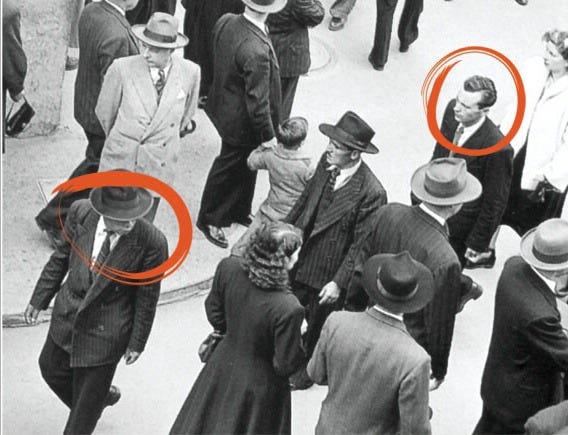
What moves me most about The informers is the way it insists that history is never over. The war may have ended, but its debris remains lodged in language, in families, in the quiet guilt of inheritance. Vásquez’s Colombia is a country haunted not by ghosts but by omissions - by what people choose not to remember. The book asks, again and again: how do you live in a world where telling the truth can ruin someone, and staying silent can ruin you?
Reading it, I was reminded of how fragile morality really is. Vásquez doesn’t judge his characters; he observes them as they circle around their guilt, their love, their need to justify what can’t be justified. The father is not a villain, the son not a hero. They are simply two people trapped inside the long afterlife of history.
In this sense, The informers feels as much like an act of exorcism as a novel. Vásquez writes against the grain of collective amnesia, trying to recover what official history has erased. But he also recognizes the danger in doing so - that to dig too deeply into the past is to risk unearthing everything that allows you to live in peace.
What makes the book linger is not just its politics, but its humanity. It’s about fathers and sons, about betrayal disguised as protection, about the impossibility of telling a story that doesn’t also betray someone else. Every page carries the quiet weight of complicity - the sense that to know is to be responsible. And yet, despite its darkness, there’s something luminous in Vásquez’s restraint. His prose feels like fog rolling through the mountains of Bogotá: soft, persistent, full of hidden contours. He writes as if he believes that truth is not an object to be uncovered but a landscape to be wandered through - slowly, uncertainly, with care.
Some books hold a mirror to their time; others tilt the mirror just enough to catch our own reflection. Vásquez reminds me that memory is never neutral - it’s an act of choice, of storytelling, of survival. And that sometimes, to tell a story truthfully is to admit that the truth can never fully be told.